

Practice AreaPersonal Injury Attorneys
in Fort Worth, TX
Panther City's injury attorneys — serving Fort Worth, Dallas, Burleson, Mansfield, Arlington, and the greater DFW metroplex. If you've been hurt through someone else's negligence, we fight to make it right. No fee unless we win.
No Fee
Unless we win your case
Free
Case evaluations
Local
Serving the greater DFW metroplex
Fast
Time limits apply — act now
SELECTIVE representation.
Maximum compensation
If you or a loved one has been injured in an accident — or harmed by a healthcare provider — in Fort Worth, Burleson, Mansfield, Arlington, Dallas, or anywhere in the DFW metroplex, you likely have urgent questions about your legal rights. At Panther City Law Group, we believe you deserve straightforward answers.
Our attorneys have spent years on both sides of these cases — including defending large corporations, trucking companies, and hospital systems. We know exactly how insurers and defense teams evaluate claims, where they look for weaknesses, and how they decide what to offer. We use that experience every day to fight for the people on the other side of that table.
This page is a starting point. Every case is different, and there is no substitute for a one-on-one consultation with an experienced attorney. All consultations are free and confidential.
Texas by the numbers2 Years
Statute of limitations for most Texas personal injury claims
$0
Upfront cost to hire a personal injury attorney (contingency fee)
51% Rule
Texas modified comparative fault — you can recover if less than 51% at fault
~600K
Crashes reported on Texas roads annually (TxDOT)
Personal injury cases we take on
-

Car Accidents
Rear-ends, T-bones, drunk drivers — we handle all vehicle accident claims and deal with insurance companies so you don't have to.
-

Truck Accidents
18-wheeler crashes often involve multiple liable parties. We know how to investigate these complex cases and pursue full compensation.
-

Slip and Fall
Property owners have a duty to keep their premises safe. When they don't, we hold them accountable for your injuries.
-

Workplace Injuries
When workers' comp isn't enough or a third party is responsible, we explore every avenue to maximize your recovery.
-

Medical Malpractice
If a healthcare provider's negligence caused you harm, we have the resources and experience to take on complex medical cases.
-

Wrongful Death
Losing a loved one due to negligence is devastating. We help families pursue justice and financial stability during an unimaginable time.
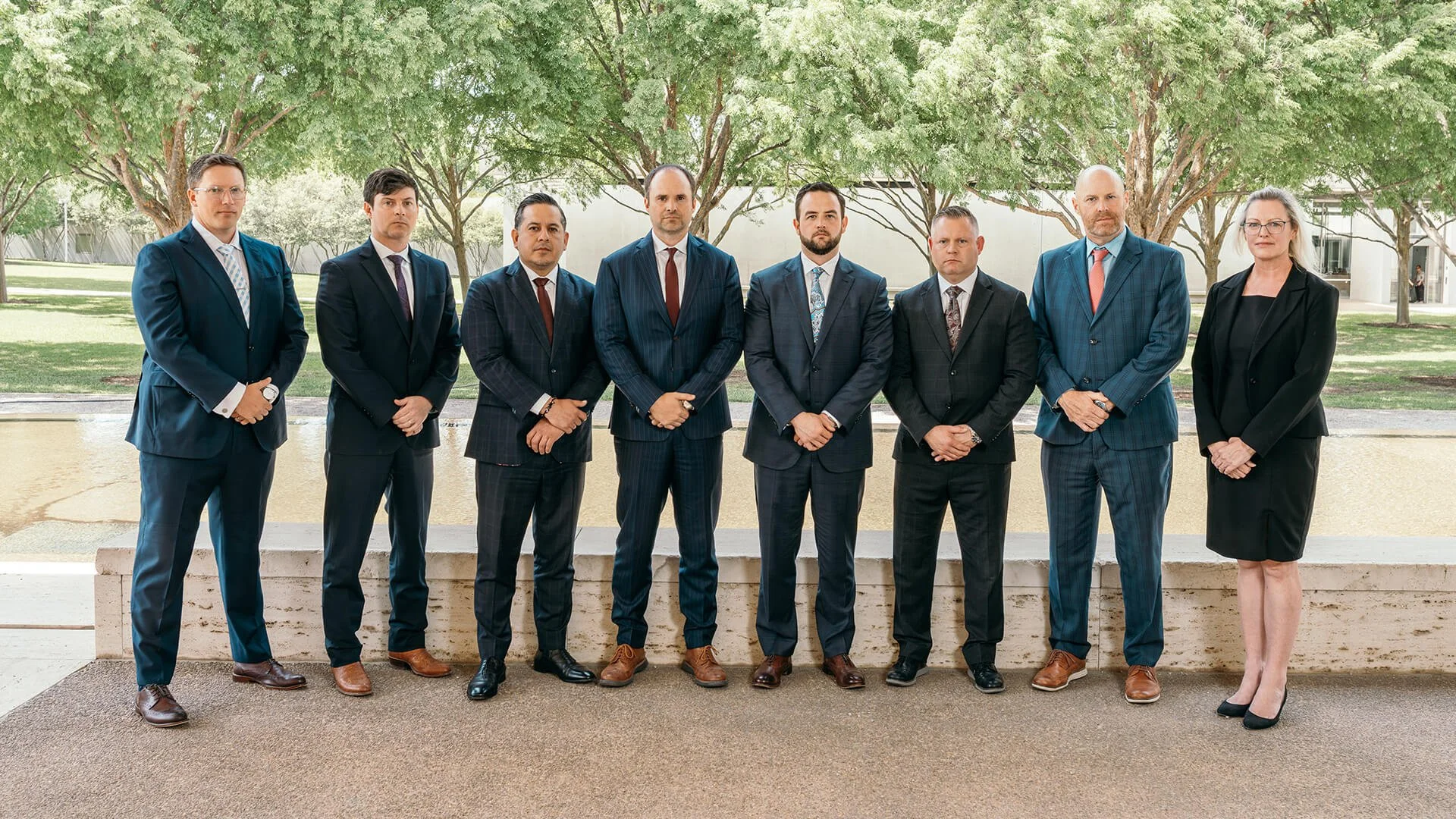
Our PEOPLEThe Attorney Behind These Answers
The information on this page is written and reviewed by licensed Texas attorneys with direct experience in personal injury and medical malpractice litigation, on both the plaintiff and defense sides.

Michael C. Farmer, Jr.
Partner & Chair, Civil Litigation — Personal Injury & Medical MalpracticeMichael leads Panther City Law Group's civil litigation practice with a focus on personal injury and medical malpractice. His experience on both the plaintiff and defense sides gives clients a direct strategic advantage in negotiations and at trial.
EXPERIENCEYears of active civil litigation in Tarrant & Dallas County courts
EXPERTISELicensed Texas attorneys. Former defense counsel for the other side.
AUTHORITYAll content reviewed for accuracy against current Texas statutes.
TRUSTFree, confidential consultations. No fee unless we recover for you.
Selective Representation
·
Maximum Compensation
·
Selective Representation · Maximum Compensation ·
Our advantageWe Know the Defense Playbook — Because We Wrote It.
Before representing injured Texans, our Fort Worth attorneys spent years defending large corporations, trucking companies, and hospital systems. We sat across the table from plaintiffs. We know exactly how insurance adjusters are trained to minimize claims, how defense firms build their liability arguments, and how large institutions from major carriers to DFW hospital networks decide what to pay and what to fight.
Now we use that knowledge for you. We don't guess at how the other side thinks — we know. That means stronger demand packages, sharper negotiations, and a litigation strategy built around what actually moves the needle in Tarrant County and Dallas County courtrooms.
insurance carriersWe know how adjusters are trained, how reserves are set, and what it takes to move a low offer — because we've been in those internal evaluations.
trucking & transportationWe've handled FMCSA compliance defense. We know what records to demand, where companies cut corners, and how to expose it.
hospitals & healthcare systemsWe understand how medical institutions respond to malpractice claims, where documentation disappears, and how to counter the expert strategies they rely on.
WHAT TO EXPECT
Free consultation
Tell us what happened. We'll review the details of your injury and let you know if you have a viable claim, at no cost to you.
Investigation and evidence gathering
We collect accident reports, medical records, witness statements, and any other evidence needed to build the strongest possible case.
Demand and negotiation
We submit a demand to the at-fault party's insurance company and negotiate aggressively on your behalf. Most cases settle here.
Trial-ready representation
If a fair settlement isn't offered, we take your case to court. Insurance companies know we mean it, and that changes the dynamic.
What our clients say
-
"After my car accident, the insurance company kept lowballing me. Panther City Law stepped in and got me a settlement that actually covered my medical bills and then some. They kept it real with me the whole time and never made me feel like just another case number."
— D.R. | Fort Worth, TX | ★★★★★
Common questions about personal injury
Take a look at the FAQ or reach out anytime. If you’re feeling ready, go ahead and contact us.General Personal Injury
-
A personal injury claim is a legal action brought when someone is physically or emotionally harmed as a result of another party's negligence or intentional misconduct. In Texas, this can include car accidents, slip and falls, truck crashes, workplace injuries, dog bites, and more.
The goal of a personal injury claim is to recover compensation (damages) for your losses — including medical bills, lost income, pain and suffering, and property damage — from the at-fault party or their insurance company.
-
A valid personal injury case generally requires four elements under Texas law:
Duty: The other party owed you a duty of care (e.g., drivers must operate vehicles safely)
Breach: They failed to meet that duty through negligent or reckless conduct
Causation: Their breach directly caused your injury
Damages: You suffered measurable losses as a result
The best way to evaluate your case is through a free consultation with our attorneys. Many viable cases are mistakenly abandoned because people assume they don't qualify.
-
In Texas, the statute of limitations for most personal injury claims is two years from the date of the injury (Texas Civil Practice & Remedies Code § 16.003). If you miss this deadline, you are almost certainly barred from recovering compensation — even if your case is strong.
Important exceptions include:
Claims against government entities (shorter notice deadlines may apply)
Injuries involving minors (the clock may not start until they turn 18)
Cases where the injury was discovered later (medical malpractice)
Do not wait. Contact our office as soon as possible after any accident.
-
Texas follows a modified comparative fault rule (also called proportionate responsibility). This means you can still recover damages even if you were partially at fault — as long as your share of fault is 50% or less.
However, your total compensation will be reduced by your percentage of fault. For example, if you were 20% at fault and your damages are $100,000, you would recover $80,000.
Insurance companies routinely try to inflate your percentage of fault to minimize what they owe. An experienced attorney helps protect you from unfair blame allocation.
-
Texas law allows injured parties to recover two broad categories of damages:
Economic damages: Medical expenses (past and future), lost wages, loss of earning capacity, property damage, rehabilitation costs
Non-economic damages: Pain and suffering, mental anguish, loss of consortium, disfigurement, loss of enjoyment of life
In cases involving egregious conduct, punitive (exemplary) damages may also be available. Texas does cap exemplary damages in most cases.
Car & Truck Accidents
-
The steps you take in the hours after a crash significantly affect your legal case:
Call 911 — Always get a police report, even for minor accidents
Seek medical attention immediately — even if you feel fine; symptoms often appear days later
Document the scene — photos of vehicles, road conditions, skid marks, signage
Exchange information — name, insurance, license plate, driver's license
Get witness contact information
Do not admit fault — even saying "I'm sorry" can be used against you
Do not give a recorded statement to the other driver's insurance before speaking with an attorney
Then call our office. Early intervention protects evidence that may disappear quickly.
The goal of a personal injury claim is to recover compensation (damages) for your losses — including medical bills, lost income, pain and suffering, and property damage — from the at-fault party or their insurance company.
-
Texas is an at-fault state (also called a tort state). This means the driver who caused the accident — and their insurance company — is responsible for paying damages to injured parties.
Unlike no-fault states, Texas allows injured parties to file a claim directly against the at-fault driver's liability insurance, pursue their own uninsured/underinsured motorist coverage, or file a personal injury lawsuit against the at-fault driver.
Texas law requires drivers to carry minimum liability insurance of $30,000 per person / $60,000 per accident / $25,000 property damage. Many at-fault drivers carry only minimum coverage, making underinsured motorist (UIM) coverage and legal representation critically important.
-
Truck accident cases are more complex than standard car accidents because multiple parties may share liability, including:
The truck driver — for negligent driving, fatigue, or impairment
The trucking company — for negligent hiring, inadequate training, or pressuring drivers to violate hours-of-service rules
The cargo loader or shipper — if improperly loaded cargo contributed to the crash
The truck manufacturer — if a defective part (brakes, tires) caused or worsened the accident
Maintenance contractors — if poor vehicle upkeep played a role
Federal trucking regulations (FMCSRs) impose strict requirements on commercial carriers. Violations of these rules are powerful evidence of negligence.
Important exceptions include:
Claims against government entities (shorter notice deadlines may apply)
Injuries involving minors (the clock may not start until they turn 18)
Cases where the injury was discovered later (medical malpractice)
Do not wait. Contact our office as soon as possible after any accident.
-
Yes, through several avenues:
Uninsured Motorist (UM) coverage on your own policy — this is why UM/UIM coverage is so important
Personal lawsuit against the at-fault driver — though collecting a judgment from an uninsured driver can be difficult
MedPay coverage on your own policy, if you have it
Texas does not require drivers to carry UM/UIM coverage, but insurers must offer it. If you declined it in writing, you may not have it. We can help you review your policy and identify all available sources of recovery.
-
Location matters in several ways. Accidents on state highways or interstates in Tarrant County — including I-35W, Loop 820, I-30, and SH-183 — typically fall under the jurisdiction of TxDOT and local law enforcement. The applicable court and governing local rules can affect litigation strategy and case timelines.
Dallas County is one of the largest and most active civil litigation markets in Texas. Cases filed in Dallas County District Court can involve significant jury pools, experienced defense firms, and higher verdict potential for serious injuries. If your accident occurred in Dallas, Irving, Garland, Mesquite, or elsewhere in Dallas County, our attorneys handle those cases regularly and know the local courts well.
Location can also be relevant if road design, signage, or maintenance contributed to the crash, potentially creating a claim against a government entity. Claims against government bodies have shorter notice deadlines and special procedural rules. Contact us immediately if you believe road conditions contributed to your Fort Worth or DFW area accident.
Insurance & Compensation
-
Almost never. Insurance companies are for-profit businesses. Their first offer is almost always significantly lower than what your case is actually worth, often made before the full extent of your injuries is known.
Once you accept a settlement and sign a release, you typically cannot go back for more money, even if your medical condition worsens. This is one of the most important reasons to have a Fort Worth personal injury attorney before negotiating.
Our attorneys evaluate the full value of your case — including future medical needs, long-term lost earnings, and pain and suffering — before recommending any settlement.
-
There is no universal formula. The value of your case depends on many factors, including:
Severity and permanence of your injuries
Total medical expenses (past and projected future costs)
Lost wages and impact on your earning capacity
The extent of pain, suffering, and emotional distress
Whether your injuries affect your daily life or relationships
The degree of the other party's fault
Available insurance coverage
Serious injuries — spinal cord damage, traumatic brain injury, permanent disability — typically result in significantly higher compensation. We provide a frank, honest assessment of your case's value at no charge.
-
Do not give a recorded statement to the other party's insurance company without speaking to a Fort Worth personal injury attorney first. Adjusters are trained to ask questions designed to minimize your claim or shift blame onto you, and our attorneys know exactly how that training works, because we've been on the defense side of these calls.
Generally safe: providing basic factual information (name, contact info, date, general description of what happened). Avoid speculating about fault, minimizing injuries ("I'm fine"), guessing at speeds or distances, or agreeing to recorded statements.
Your own insurance company is different — you generally have a duty to cooperate with your own insurer. We can advise you on how to handle both.
-
Possibly, yes. This is known as a subrogation claim. If your health insurance paid your medical bills after an accident caused by someone else, they may have the right to seek reimbursement from your settlement proceeds.
Government health programs (Medicare, Medicaid, TRICARE) have particularly strong and strictly enforced subrogation rights. Failing to address these liens properly can expose you to serious legal problems.
Our attorneys identify all outstanding liens, negotiate them down where possible, and ensure your settlement is properly structured to protect you.
Working with an Attorney
-
Personal injury attorneys in Texas work on a contingency fee basis. This means:
No upfront fees — you pay nothing to hire us
No hourly billing — our fee is a percentage of what we recover for you
No recovery, no fee — if we don't win, you owe us nothing
The typical contingency fee in Texas is 33 to 40 percent of the total recovery, depending on whether the case settles or goes to trial. Case expenses (filing fees, expert witnesses, depositions) are discussed upfront and addressed in your fee agreement.
This structure ensures that everyone — regardless of financial resources — can access experienced Fort Worth legal representation after an injury.
-
As soon as possible after your accident. Early legal involvement matters because:
Evidence disappears quickly — surveillance footage is often overwritten within days
Witnesses' memories fade
Accident scenes change
Insurance companies begin building their defense immediately — and so should you
For truck accidents, critical data (black box, driver logs) must be preserved through legal action
Our Fort Worth attorneys have defended these same companies and insurers. We know their first moves and how to get ahead of them. A free consultation costs you nothing and could make a significant difference in the outcome of your case.
-
It varies significantly depending on the complexity of your case:
Simple claims that settle early: A few months
Moderately complex claims: 6–18 months
Cases that go to trial: 2–4 years or more, depending on court dockets in Tarrant or Dallas County
We typically recommend waiting until you reach maximum medical improvement (MMI) — the point at which your doctor believes your condition has stabilized — before settling. This ensures we capture the full scope of your injuries and future medical needs.
We keep you informed at every stage and move your case as efficiently as the facts allow.
-
The large majority of personal injury cases, roughly 95%, settle before trial. However, we prepare every case as if it will go before a jury. Insurance companies and defense firms settle for more when they know your attorneys have been on their side of the table and understand exactly what a strong plaintiff's case looks like at trial.
If a fair settlement cannot be reached, we will not hesitate to take your case to trial in Tarrant County, Dallas County, or wherever venue is appropriate. We know the defense strategies because we've used them, and we know how to dismantle them.
Specific Injuries & Situations
-
This is extremely common, especially with soft tissue injuries (whiplash, muscle tears), traumatic brain injuries, and internal injuries. Adrenaline following an accident can mask pain, and some conditions take days or weeks to manifest.
This is why you should always seek medical attention after an accident, even if you feel okay. Delayed medical treatment gives insurance companies ammunition to argue your injuries weren't caused by the accident.
Your statute of limitations still runs from the date of the accident in most cases — not when you discovered your injuries. Contact our Fort Worth office even if time has passed since your accident.
-
Yes — this falls under premises liability law. Property owners in Texas have a legal duty to maintain reasonably safe conditions for visitors. The extent of that duty depends on your status as a visitor:
Invitee (customer at a store): Highest duty of care — owner must inspect for and fix/warn of hazards
Licensee (social guest): Must warn of known dangers
Trespasser: Lowest duty, with limited exceptions
Common premises liability claims in the Fort Worth and DFW area include slip and falls in grocery stores, injuries in apartment complexes, swimming pool accidents, and negligent security cases at bars or parking lots.
-
A wrongful death claim allows certain family members to seek compensation when a loved one is killed through another party's negligence or intentional act. Under the Texas Wrongful Death Act, eligible plaintiffs include the deceased's spouse, children, and parents.
Recoverable damages may include loss of financial support, loss of companionship and society, mental anguish, and funeral expenses. The statute of limitations is two years from the date of death.
If a family member has died due to someone else's negligence — in a car crash, a workplace accident, or another incident in the Fort Worth or DFW area — please contact us immediately. These cases require urgent attention to preserve evidence.
-
It depends. Texas is unique among U.S. states in that employers are not required to carry workers' compensation insurance. This creates two distinct situations:
Employer has workers' comp: You generally file a workers' comp claim, but may also have a third-party claim against a non-employer (e.g., a contractor, equipment manufacturer, or property owner)
Employer is a non-subscriber (no workers' comp): You can file a direct personal injury lawsuit against your employer and have access to broader damages — and the employer cannot use the "fellow employee" or "assumed risk" defenses
Construction accidents, oilfield injuries, and warehouse incidents in the Fort Worth and DFW area frequently involve complex overlapping liability. We can help identify all available avenues of recovery.
The Legal Process
-
Our initial consultations are completely free and confidential. During the meeting, we will:
Listen to the full account of your accident and injuries
Review any documents you have (accident report, medical records, insurance correspondence)
Identify all potentially liable parties and sources of recovery
Give you an honest assessment of your case's strengths and challenges
Explain your options and next steps clearly
You are under no obligation to hire us. Our job in this meeting is to inform you — not pressure you. Consultations can be conducted in-person at our Fort Worth office, by phone, or by video conference.
-
A settlement is a negotiated agreement between you and the opposing party (usually their insurance company) reached outside of court. Settlements resolve the case faster, provide certainty, and avoid the risks of trial.
A verdict is a decision rendered by a judge or jury after a full trial. Verdicts can result in larger awards, but they also carry the risk of an unfavorable outcome and may be subject to post-trial motions and appeals.
Our goal is always to maximize your recovery. We advise clients on when to accept a settlement and when the strength of the case warrants going to trial in Tarrant or Dallas County, and we always let you make the final decision.
-
Strong evidence typically includes:
Police/accident reports — Official documentation of the incident
Medical records — Connecting your injuries directly to the accident
Photographs and video — Of the scene, vehicles, injuries, and conditions
Witness statements — Independent accounts of what happened
Expert testimony — Medical experts, accident reconstruction specialists
Electronic data — Black box data (trucks), surveillance footage, cell records
Documentation of losses — Pay stubs, employer letters, receipts for all expenses
We take a proactive approach to evidence preservation and work with experienced investigators and experts to build the strongest possible case for Tarrant County and DFW clients.
-
Generally, compensation for physical injuries is not taxable under federal tax law (IRC § 104). This includes damages for medical expenses, pain and suffering, and lost wages tied to a physical injury.
However, some portions of a settlement may be taxable, including punitive damages, interest on the settlement, and compensation for emotional distress not connected to a physical injury.
Tax implications can be complex and vary by case. We strongly recommend consulting a qualified tax professional regarding your specific settlement. Our attorneys can also help structure settlements in ways that are most favorable to you.
Medical Malpractice
-
Medical malpractice — formally called a health care liability claim under Texas law — occurs when a healthcare provider's treatment falls below the accepted standard of care and causes harm to a patient. This can involve a physician, surgeon, nurse, hospital, clinic, or other licensed provider.
Common examples include misdiagnosis or delayed diagnosis, surgical errors (wrong site, retained instruments), medication errors, birth injuries, failure to obtain informed consent, and anesthesia complications.
Importantly, a bad outcome alone is not malpractice. Medicine involves inherent risks, and not every poor result is the result of negligence. The key question is whether the provider's conduct fell below what a reasonably prudent provider in the same specialty would have done.
-
The statute of limitations for medical malpractice in Texas is two years from the date of the negligent act, treatment, or omission — or from the date you discovered (or should have discovered) the harm, whichever is earlier. This is governed by the Texas Medical Liability Act (Tex. Civ. Prac. & Rem. Code § 74.251).
There is also an absolute 10-year statute of repose — meaning no claim can be brought more than 10 years after the negligent act, regardless of when it was discovered.
For minors, the SOL is tolled until age 12, but no later than age 14. If you believe you or a family member has been harmed by a healthcare provider in the Fort Worth or DFW area, contact us immediately — these deadlines are strictly enforced.
-
Yes — Texas caps non-economic damages (pain and suffering, mental anguish, disfigurement, loss of consortium) in health care liability claims under § 74.301:
$250,000 per defendant physician or individual provider
$250,000 per defendant hospital or health care institution (aggregate across all claimants)
Total cap of $500,000 if multiple institutional defendants are involved
Economic damages are not capped. This means there is no limit on recovery for past and future medical expenses, lost wages, loss of earning capacity, home care costs, and other measurable financial losses. Cases involving permanent disability, catastrophic injury, or significant lost income can still result in substantial recovery despite the non-economic cap.
-
Yes. Under the Texas Medical Liability Act (§ 74.351), a plaintiff must serve an expert report on each defendant within 120 days of filing the lawsuit. This report must come from a qualified physician who:
Practices or teaches in the same specialty as the defendant
Has done so within the five years preceding the incident
Is board-certified or has equivalent training in the relevant area
The expert report must address the applicable standard of care, how the defendant deviated from it, and how that deviation caused the plaintiff's injury. Failure to timely serve a compliant report results in dismissal of the case with prejudice and an award of attorney's fees to the defendant.
This requirement makes it essential to hire a Fort Worth medical malpractice attorney experienced in these cases as early as possible.
-
Before filing a medical malpractice lawsuit in Texas, you must provide written notice to each defendant at least 60 days before filing (Tex. Civ. Prac. & Rem. Code § 74.051). This notice must be accompanied by a medical authorization allowing the defendant to access your relevant medical records.
Serving this notice within 10 days of the statute of limitations expiration tolls (pauses) the SOL for 75 days, giving additional time to file if needed. However, this tolling only applies if the notice is timely and properly served.
The pre-suit notice requirement adds procedural complexity that makes early attorney involvement critical. Our Fort Worth medical malpractice attorneys manage these deadlines from day one.
-
Yes. If a patient dies as a result of medical negligence, eligible family members may bring a wrongful death claim and the estate may bring a survival claim for damages suffered before death. Under the Texas Wrongful Death Act, eligible plaintiffs include the decedent's surviving spouse, children, and parents.
Recoverable wrongful death damages include loss of financial support, loss of companionship and care, mental anguish, and funeral expenses. The survival claim may recover pre-death pain and suffering and medical expenses.
The same non-economic damages cap (§ 74.301) applies to wrongful death medical malpractice cases. The statute of limitations is two years from the date of death. If you have lost a loved one due to suspected medical negligence in the Fort Worth or DFW area, please contact us immediately — these cases require urgent attention to preserve records and meet pre-suit notice requirements.
Common Questions from Fort Worth Injury Victims
-
The best personal injury attorney for your case is one who has specific experience with your type of injury, knows the Texas courts where your case will be heard, and understands how the defense side operates.
The attorneys at Panther City Law Group are unique in that they spent years defending corporations, trucking companies, and hospital systems before switching exclusively to representing injured Texans in Fort Worth, Tarrant County, and across the DFW metroplex. That inside perspective on defense strategy is rare and directly benefits clients at the negotiating table and in court.
We encourage you to ask any attorney you consider: Have you worked the defense side? Do you know how the insurance company's internal evaluations actually work? Those answers matter.
-
No. Most personal injury cases in Texas resolve through negotiated settlements, never requiring a trial. Roughly 95% of cases settle before any courtroom appearance is needed.
However, preparing your case as if it will go to trial is essential. Insurance companies offer significantly better settlements when they believe your attorneys are prepared and willing to take the case all the way to a Tarrant County or Dallas County jury. The threat of trial — backed by real preparation — is one of the most powerful tools in settlement negotiations.
-
You may have a medical malpractice claim if one or more of the following occurred:
Your condition worsened unexpectedly after treatment
A second opinion contradicts your original diagnosis
A procedure was performed on the wrong body site, or a surgical instrument was left inside you
You were not properly informed of the risks before a procedure
You received the wrong medication or wrong dosage
A diagnosis that should have been made was delayed or missed entirely
A bad outcome alone is not malpractice — medicine involves inherent risks. The question is whether your provider fell below the accepted standard of care. A free consultation with our Fort Worth medical malpractice attorneys is the best way to evaluate your specific situation.
-
Nothing upfront. Texas personal injury and medical malpractice attorneys work on a contingency fee basis, meaning you pay no attorney's fees unless your lawyer recovers money for you. If there is no recovery, there is no fee.
The fee is typically 33 to 40 percent of the total recovery, depending on whether the case settles or goes to trial. Case expenses (filing fees, expert witnesses, medical record retrieval, depositions) are addressed in your fee agreement.
Your initial consultation at our Fort Worth office is always free and completely confidential, with no obligation to hire us.
-
Being hit by an uninsured driver in Fort Worth or anywhere in Tarrant County doesn't necessarily mean you're without options. Recovery may be available through:
Your own Uninsured Motorist (UM) or Underinsured Motorist (UIM) coverage — this is the most important avenue and why carrying UM/UIM is strongly recommended in Texas
MedPay coverage on your own auto policy, if you have it
A personal lawsuit against the at-fault driver — though collecting can be challenging
Our attorneys will review your full auto insurance policy at no charge to identify every available source of compensation.
-
Item desYes, as long as you were 50 percent or less at fault. Texas's modified comparative fault rule (proportionate responsibility) allows you to recover even if you share some blame for the accident. Your compensation is simply reduced by your percentage of fault.
For example: if a jury determines you were 25% at fault and your total damages were $200,000, you would receive $150,000.
Insurance companies will often try to push your fault percentage higher than it actually is. An experienced Fort Worth personal injury attorney protects you from unfair blame allocation and ensures the facts are accurately presented.acription
Injured in Fort Worth? Let's talk.Time matters in personal injury cases. The sooner we start, the stronger your claim. Your consultation is free, and there's no obligation.
No fee unless we win. No obligation to move forward after your consultation.
The information on this page is provided for general informational purposes only and does not constitute legal advice. Reading this FAQ does not create an attorney-client relationship. Every case is different, and outcomes depend on the specific facts and applicable law. Past results do not guarantee future outcomes. If you have been injured or believe you have a medical malpractice claim, please consult with a qualified Texas attorney regarding your specific situation. Panther City Law Group is located in Fort Worth, Texas, and represents clients in Tarrant, Dallas, Denton, Parker, Johnson, and Hood counties.